|
The Federal Court, established 1971 to replace the Exchequer Court, enjoys jurisdiction chiefly over matters involving the federal government, eg, lawsuits against it and supervision of actions by federal government bodies and officials. |
|
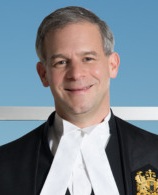
OverviewThe Federal Court of Canada is a superior court of record with civil and criminal jurisdiction. The Court was created in 1971 as successor to the Exchequer Court of Canada which was established in 1875. Both courts were established under the authority of Section 101 of the Constitution Act, 1867, as courts of law, equity and admiralty for the "better administration of the laws of Canada."The Federal Court of Canada is a bilingual court offering services in both English and French and is bi-jural, administering the two legal systems - common law and civil law. It is also itinerant, in the sense that it sits and transacts business at any place in Canada, to suit, as nearly as may be, the convenience of the parties. It is the objective of the Court to secure the just, most expeditious and least expensive determination of every proceeding on its merits. The court is the only court in Canada with jurisdiction over certain specialized areas, eg, maritime law, patent and copyright law, although in some specialized areas it shares concurrent jurisdiction with provincial superior courts. Until 2003, the Federal Court of Canada consisted of two divisions: an Appeal and a Trial Division. With amendments to the Federal Courts Act coming into force on July 2, 2003, these divisions became two separate courts: the Federal Court of Appeal and the Federal Court. The Honourable Alan Diner, Chief Justice of the Federal Court
Prior to his appointment to the Court, Chief Justice Diner practised immigration and administrative law with several law firms, including Bennett Jones and McCarthy Tétrault, in Toronto, and Flavell Kubrick & Lalonde, in Ottawa. He later held senior public service positions, including managing the establishment of the Ontario Immigrant Nominee Program for Ontario’s Ministry of Citizenship and Immigration. In 2008, he joined Baker & McKenzie, where he led the firm’s Canadian Immigration Law Practice Group until his appointment to the Court. Throughout his career, Chief Justice Diner has been active in community service with board and pro bono work, for which he was recognised with the Queen Elizabeth II Diamond Jubilee Medal and several other awards, including most recently the inaugural President’s Award from the Canadian Immigration Lawyers Association. Since joining the Court, he has chaired both its Immigration Committee and its Technology Committee. He has also actively engaged with law students, having founded the Immigration Law Moot, served as a judge for the Fox and Wilson Moots, and taught at law faculties, including at the University of Toronto and Bond University. Chief Justice Diner holds a Bachelor of Laws and a Master of Laws in International Trade and Competition Law, both from Osgoode Hall Law School. He was admitted to the Bar of Ontario in 1995 and the Bar of New York in 2005. He was certified as a Specialist in Immigration Law by the Law Society of Ontario in 2013 and was recognised in peer-reviewed services such as Who’s Who, Lexpert, and Martindale Hubbell. |