|
Since Canada is a consitutional monarchy, the Sovereign (King or Queen) is our Head of State. But since the Sovereign is also the Head of State of 15 other countries*, it is impossible for him or her to be a part of everyday government functions. The Governor General, then, is the Sovereign's representative in Canada but is the ultimate authority in government for the nation. Ever since the Letters Patent of 1947, the Governor General has assumed all of the powers of the Sovereign. Even the presence of the Sovereign in the country does not superceed the authority of the Governor General and therefore the Governor General is 1st on the Canadian Order of Precedence. |
|
Roles and ResponsibilitiesThe Governor General is selected by the Prime Minister and formally appointed by the Sovereign to act as her representative in Canada. The appointment is usually for five years but has sometimes been extended to seven. Bills passed in the House of Commons and Senate do not become law until the Governor General has given them royal assent. The Governor General executes all orders-in-council and other state documents, appoints all superior court judges (on the advice of Cabinet) and summons, prorogues, and dissolves Parliament (on the advice of the prime minister). Also, the Governor General invites the leader of the political party with the most support in the House of Commons to form a government. The Governor General also delivers the Speech from the Throne at the beginning of each parliamentary session.
The Governor General has two official residences. Rideau Hall (also known as the Government House) at 1 Sussex Drive in Ottawa across the road from 24 Sussex - the official residence of the prime minister. The other is La Citadelle on the grounds of the Canadian Forces Base in Quebec City. Both are pictured below. * The Sovereign of Canada is also the Head of State of Antigua and Barbuda, Australia, the Bahamas, Belize, Grenada, Jamaica, New Zealand, Papua New Guinea, St. Kitts and Nevis, St. Lucia, St. Vincent and the Grenadines, the Solomon Islands, Tuvalu, and the United Kingdom. |
 |  |
| Rideau Hall | La Citadelle |
|---|
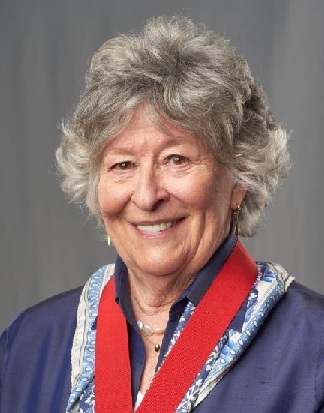
Her Excellency The Right Honourable Louise Arbour, Governor General of CanadaMs. Arbour is a world-renowned legal scholar, judge, and leader in human rights and justice. With a career of service spanning more than five decades, she has held nearly every office a Canadian jurist can hold, and several that no Canadian had held before. She was appointed as a judge to the Supreme Court of Ontario, the Court of Appeal for Ontario, and the Supreme Court of Canada. In 1996, she was appointed by the United Nations (UN) as Chief Prosecutor for the International Criminal Tribunals for the former Yugoslavia and for Rwanda. In these roles, she led efforts that resulted in the first conviction for genocide since the Genocide Convention and the first indictment for war crimes of a sitting head of state.
Ms. Arbour is a Companion of the Order of Canada, Canada's highest civilian honour, and a Grande officière de l'Ordre national du Québec. She has received nearly 100 honours and awards, including 42 honourary doctorates from universities around the world. Ms. Arbour's experience, judgement, moral clarity, and conviction will serve Canada exceedingly well. 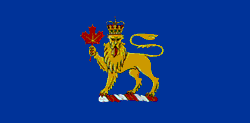 |